September 25, 2023
Love Your Skin! The Benefits of Facials
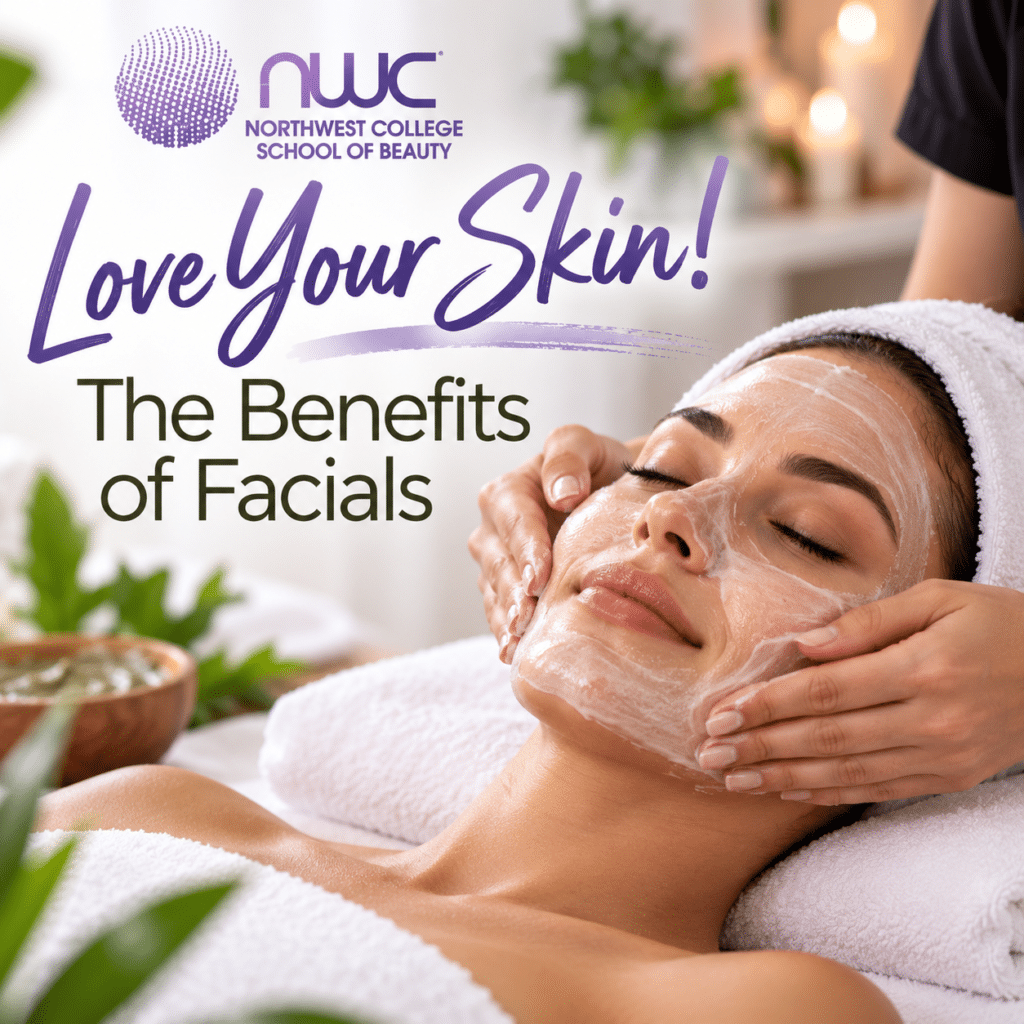
Facials are skincare treatments that cleanse, exfoliate, moisturize, and help improve the appearance and feel of the skin. Depending on the products and techniques used, a facial may leave skin feeling smoother, help address surface oiliness or dryness, and provide a relaxing spa experience. Northwest College School of Beauty offers supervised student salon facial services for guests interested in professional skincare, while its Esthetics Program teaches students facial treatments, skin analysis, product selection, and sanitation. Understanding the benefits of facials can help you choose a treatment that fits your skin’s needs and set realistic expectations for the results.
What Are the Benefits of Getting a Facial?
The main benefits of a facial include cleansing, exfoliation, hydration, temporary improvements in skin texture and appearance, and relaxation. A facial can also provide an opportunity to discuss skincare products and daily routines with a trained service provider.
Facials are more than a relaxing way to pamper yourself. A facial in a spa setting may include cleansing, a calming massage, an invigorating mask, and other treatments selected for your skin.
Common facial benefits include:
- Deep cleansing to remove surface oil, makeup, and debris.
- Exfoliation to remove loose surface skin cells and help skin feel smoother.
- Moisturizing treatments to help dry skin feel softer and more comfortable.
- Temporary improvements in the appearance of dull or uneven skin texture.
- Relaxation through gentle massage and a quiet treatment environment.
- Skincare recommendations based on your skin type and concerns.
Results vary depending on the treatment, products, skin condition, and individual response. Facials are cosmetic skincare services and should not be presented as cures for medical skin conditions.
How Does a Facial Deep Cleanse Your Skin?
A facial deep cleanse removes surface impurities such as makeup residue, excess oil, and environmental debris using products appropriate for the client’s skin. It may involve more than one cleansing step, depending on the treatment.
During a facial, the provider may begin by removing makeup or sunscreen before applying a cleanser selected for the skin’s characteristics.
Cleansing helps prepare the skin for additional steps such as exfoliation, a mask, or moisturizing products.
Different skin types may benefit from different cleansing approaches:
- Dry skin may require a gentle cleanser that does not leave the skin feeling tight.
- Oily skin may benefit from products formulated to remove excess surface oil.
- Sensitive skin may require fragrance-free or otherwise carefully selected products.
- Combination skin may need attention to areas with different oil and moisture levels.
A facial cleanse does not remove all material from inside pores or permanently prevent clogged pores. The purpose is to cleanse the skin appropriately without unnecessary irritation.
How Does Exfoliation During a Facial Help Your Skin?
Exfoliation removes loose skin cells from the surface of the skin, which can help it feel smoother and look less dull. Depending on the method, exfoliation may be performed with a gentle physical product or a suitable chemical exfoliant.
The skin naturally sheds surface cells, but exfoliation can help remove some of the buildup that contributes to a rough or uneven appearance.
Potential cosmetic benefits include:
- Smoother-feeling skin.
- A temporarily brighter appearance.
- Removal of some dry, flaky surface skin.
- Improved application of certain skincare products or makeup.
Exfoliation should be matched to the client’s skin type and condition. Stronger treatment is not necessarily better.
Over-exfoliating may cause irritation, redness, dryness, or increased sensitivity. A facial provider should consider recent skincare treatments, product use, and other relevant factors before choosing an exfoliation method.
Clients should also follow appropriate aftercare recommendations, including sun protection when advised.
Can Facials Help With Dry or Oily Skin?
Facials can help address the temporary appearance and feel of dry or oily skin by using products selected for those concerns. Moisturizing products may make dry skin feel more comfortable, while appropriate cleansing can help remove excess surface oil.
For dry skin, a facial may include gentle cleansing, a moisturizing mask, and a finishing product intended to support skin hydration.
For oily skin, the provider may focus on suitable cleansing products and avoiding treatments that leave the skin feeling overly stripped.
Common approaches include:
- Dry skin: Gentle cleansing and moisturizing products.
- Oily skin: Appropriate cleansing and lightweight skincare products.
- Combination skin: Product selection based on different areas of the face.
- Sensitive skin: Gentle techniques and careful ingredient selection.
Facials do not permanently change a person’s skin type. Ongoing skincare habits, environmental conditions, and other factors influence how skin looks and feels between appointments.
If dryness, redness, or oiliness is persistent or accompanied by discomfort, a healthcare professional may be able to evaluate whether an underlying condition needs attention.
Do Facials Help With Acne and Blemishes?
Some facials may help cleanse oily skin and temporarily improve the appearance of certain surface blemishes, but facials are not a substitute for medical acne treatment.
Acne can have several contributing factors, and not every facial technique is appropriate for acne-prone skin.
A provider may use gentle cleansing, suitable exfoliation, or products intended for oily skin, depending on the client’s needs.
Clients should avoid assuming that aggressive exfoliation or extraction will produce better results. Inappropriate techniques can irritate the skin.
Before receiving a facial, tell the provider about:
- Current acne treatments or prescription skincare products.
- Recent chemical peels or other procedures.
- Areas of broken or irritated skin.
- Known ingredient sensitivities.
- Any history of unusual reactions to skincare products.
Persistent, painful, or severe acne should be evaluated by an appropriate healthcare professional.
For cosmetic facials, realistic goals may include gentle cleansing, skin comfort, and selecting products that do not unnecessarily irritate the skin.
Can Facials Reduce the Appearance of Fine Lines and Wrinkles?
Some facials may temporarily soften the appearance of fine lines by moisturizing the skin, but standard cosmetic facials do not stop aging or permanently remove wrinkles.
Skin appearance changes over time for many reasons, including genetics, sun exposure, environmental conditions, and normal aging.
Hydrating products can temporarily make dry skin look smoother, especially when fine lines are more noticeable because of dryness.
Gentle massage and masks may also contribute to the relaxing experience of a facial.
However, claims that facials prevent premature aging, dramatically increase collagen, or permanently eliminate wrinkles should be evaluated carefully.
For everyday skincare, sun protection and an appropriate routine are important considerations. Clients with specific concerns about wrinkles or skin changes can discuss treatment options with a qualified healthcare professional.
Do Facials Detoxify Your Skin or Increase Circulation?
Facials can cleanse the skin’s surface, but there is not reliable evidence that ordinary cosmetic facials detoxify the body or meaningfully increase metabolism. The liver and kidneys perform major roles in processing and eliminating many waste substances.
Some spa descriptions use the word detoxifying to describe masks or cleansing products. In this context, it is more accurate to explain that a product may remove surface oil or residue.
Facial massage may temporarily affect the sensation or appearance of the treated area, but it should not be described as a proven treatment for systemic circulation problems or metabolic conditions.
When choosing a facial, focus on the treatment’s supported cosmetic purposes:
- Cleansing surface impurities.
- Moisturizing the skin.
- Gentle exfoliation.
- Temporarily improving skin texture or appearance.
- Providing a relaxing spa experience.
These benefits are meaningful without suggesting that a facial performs medical functions.
What Happens During a Professional Facial?
A professional facial generally includes a consultation, cleansing, skin assessment, selected treatment steps, and finishing skincare products. The exact process depends on the service booked and the client’s skin needs.
A typical facial may follow these steps:
- Consultation: The provider asks about skincare concerns, sensitivities, products, and relevant treatment history.
- Cleansing: Makeup, oil, and surface debris are removed using an appropriate cleanser.
- Skin assessment: The provider observes visible skin characteristics to help select suitable cosmetic products and techniques.
- Exfoliation: A gentle exfoliating step may be included when appropriate.
- Massage or additional treatment: The service may include facial massage or other permitted techniques.
- Mask application: A mask may be selected for moisturizing, conditioning, or another cosmetic purpose.
- Finishing products: Moisturizer and other suitable skincare products may be applied.
- Aftercare discussion: The provider may explain how to care for the skin following the service.
Not every facial includes every step. For example, some treatments emphasize cleansing and exfoliation, while others include additional masking or massage.
A facial should be adapted to the individual’s skin rather than following an identical procedure for every guest.
What Is the Difference Between a Basic Facial and a European Spa Facial?
A basic facial generally focuses on foundational skincare steps, while a European spa facial may include additional treatment elements such as a mask.
Northwest College School of Beauty’s published student salon menu lists two facial options:
- Basic Facial: Cleansing, toning, and exfoliation.
- European Spa Facial: Cleansing, toning, exfoliation, and a mask.
Both services introduce guests to facial skincare in a supervised student salon environment.
The appropriate choice depends on your preferences, skin characteristics, and the current service menu.
Guests should confirm the exact service steps, prices, and appointment availability with their preferred campus before booking.
How Often Should You Get a Facial?
There is no single facial schedule that is appropriate for everyone. How often to book depends on skin type, the treatment being performed, product strength, skin sensitivity, and personal preferences.
Some people enjoy periodic moisturizing or cleansing facials as part of a self-care routine. Others may choose less frequent appointments or rely primarily on a consistent home skincare routine.
Factors to consider include:
- Whether your skin is dry, oily, combination, or sensitive.
- Whether the facial includes exfoliation or other active products.
- How your skin responds after treatment.
- Your existing skincare routine.
- Your schedule and personal preferences.
More frequent facials do not automatically produce better results. Repeated exfoliation or the use of incompatible products can irritate the skin.
A service provider can discuss appropriate cosmetic treatment intervals, while a healthcare professional should address ongoing medical skin concerns.
Are Facials Safe for Sensitive Skin?
Some facials can be adapted for sensitive skin, but product selection and treatment intensity matter. People with sensitive or reactive skin may need gentler cleansing, limited exfoliation, and careful ingredient choices.
Before the appointment, tell the provider about:
- Known skincare allergies or sensitivities.
- Recent irritation or sunburn.
- Prescription or over-the-counter skincare treatments.
- Recent exfoliating or cosmetic procedures.
- Any discomfort associated with particular products.
A provider may need to modify the treatment or recommend postponing it when the skin is irritated.
Facials should not cause significant burning, pain, or persistent discomfort. Clients should communicate any unusual sensation during the appointment.
If a skin condition requires diagnosis or medical treatment, consult an appropriate healthcare professional.
Can You Book a Facial at Northwest College School of Beauty?
Yes. Northwest College School of Beauty offers facial treatments through its student salon and spa services. Students provide services under the supervision of licensed professionals as part of their practical education.
The school’s published service menu includes basic facials and European spa facials.
Before scheduling, guests should review:
- Current facial service options.
- Prices and any applicable service changes.
- Campus-specific availability.
- Appointment times.
- Expected service duration.
- Any preparation or consultation requirements.
Student salon services are part of a supervised educational setting, so appointment timing and procedures may differ from those at other spas.
Northwest College School of Beauty lists student salon services at its Oregon locations. Guests should call their preferred campus to confirm the available facial treatments and schedule an appointment.
Review the school’s facial treatments and student salon services for current offerings and published prices.
How Much Does a Facial Cost at Northwest College School of Beauty?
Northwest College School of Beauty’s published student salon menu lists a Basic Facial at $35 and a European Spa Facial at $45. These prices are more current than the $20 starting price stated in the original version of this article.
The Basic Facial includes cleansing, toning, and exfoliation. The European Spa Facial adds a mask to those steps.
Prices and service availability can change, so guests should confirm the current amount before booking.
Student salon services provide guests with an opportunity to receive skincare treatments in a supervised educational environment while students practice approved techniques.
What Do Esthetics Students Learn About Facials?
Esthetics students learn how to perform approved facial treatments through instruction in skin science, sanitation, product selection, consultation, and practical techniques.
Northwest College School of Beauty’s Esthetics Program includes education in facial massage and treatments, facial machines and services, makeup, hair removal, and other skincare subjects.
Students develop knowledge in areas such as:
- Skin structure and function.
- Recognizing visible skin characteristics.
- Choosing suitable cosmetic products.
- Facial cleansing and exfoliation.
- Mask application.
- Facial massage techniques.
- Sanitation and infection control.
- Client consultation and communication.
- Professional service preparation and aftercare.
The school’s published Esthetics Program consists of 600 clock hours and includes supervised practical training in a simulated spa setting.
Students can apply classroom knowledge during approved educational activities and receive instructor feedback as they develop their skills.
To explore skincare education, visit Northwest College School of Beauty’s Esthetics Program.
Why Learn Facial Treatments at Northwest College School of Beauty?
Northwest College School of Beauty offers esthetics education that combines classroom instruction with practical learning and instructor guidance.
Facial treatments are one part of the broader esthetics curriculum, which also introduces students to skincare science, sanitation, professional products, and client care.
Students have opportunities to practice technical procedures while learning why consultations, product selection, and safety matter.
The educational experience includes:
- Instruction in foundational skincare concepts.
- Practical training in approved esthetics services.
- Supervised student salon experiences.
- Instructor demonstrations and feedback.
- Learning about Oregon rules and professional responsibilities.
- Preparation to sit for the applicable state licensing examination after meeting eligibility requirements.
Esthetics education provides a foundation in professional skincare, but it does not guarantee employment, earnings, or a particular licensing outcome.
How Can You Get Started With Esthetics Training?
Students interested in learning facial treatments can begin by reviewing the Esthetics Program curriculum and contacting Northwest College School of Beauty about current enrollment opportunities.
Prospective students can take these steps:
- Review the Esthetics Program and its 600-clock-hour curriculum.
- Ask about facial treatment and practical training requirements.
- Compare campus locations and available schedules.
- Discuss tuition, fees, and financial aid options for those who qualify.
- Schedule a tour of the training environment.
- Review admissions requirements and upcoming start dates.
- Complete the enrollment process when ready.
Whether you are interested in receiving a facial or learning how to provide skincare services, Northwest College School of Beauty offers ways to explore esthetics through its student salon and educational programs.
For program questions, enrollment information, or campus tours, contact Northwest College School of Beauty.
Frequently Asked Questions About Facials
What are the main benefits of a facial?
Facials can cleanse, exfoliate, moisturize, and temporarily improve the appearance and feel of the skin. They may also provide relaxation and an opportunity to discuss appropriate skincare products and routines.
Can facials help with dry skin?
Yes. A facial that includes suitable moisturizing products may temporarily help dry skin feel softer and more comfortable. Results depend on the products used and individual skin characteristics.
Do facials remove toxins from your skin?
Facials cleanse the skin’s surface but are not proven to detoxify the body. The liver and kidneys perform major roles in processing and eliminating many waste substances.
How often should you get a facial?
Facial frequency depends on skin type, sensitivity, the treatment performed, and personal preferences. There is no single schedule that is appropriate for everyone, and more frequent treatments are not always better.
How much is a facial at Northwest College School of Beauty?
The school’s published student salon menu lists a Basic Facial at $35 and a European Spa Facial at $45. Prices and availability may change, so guests should confirm current details with their preferred campus.
Are facials performed by students at Northwest College?
Yes. Northwest College School of Beauty offers student salon facial services performed by students under the supervision of licensed professionals. These appointments are part of the school’s practical education environment.